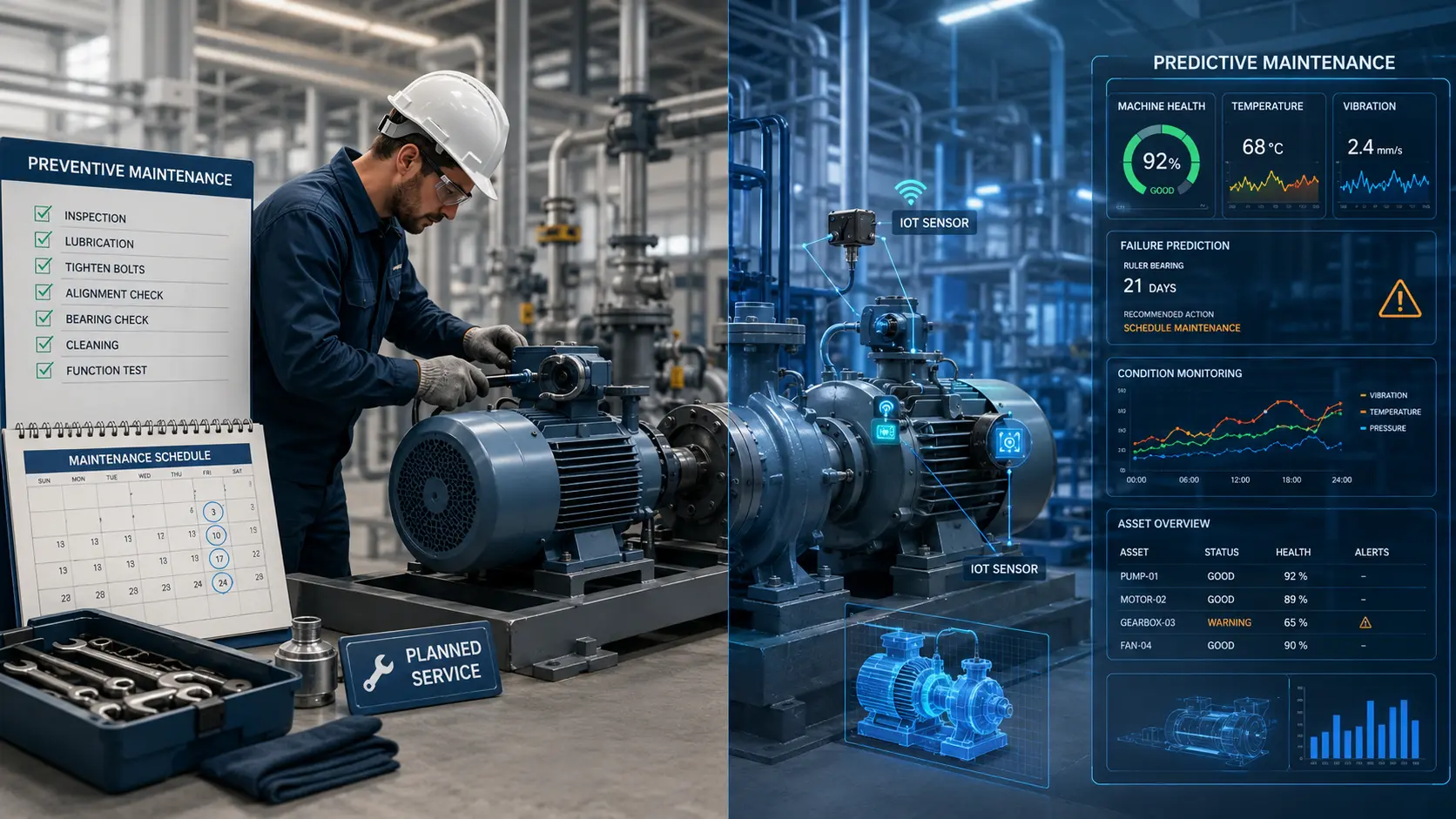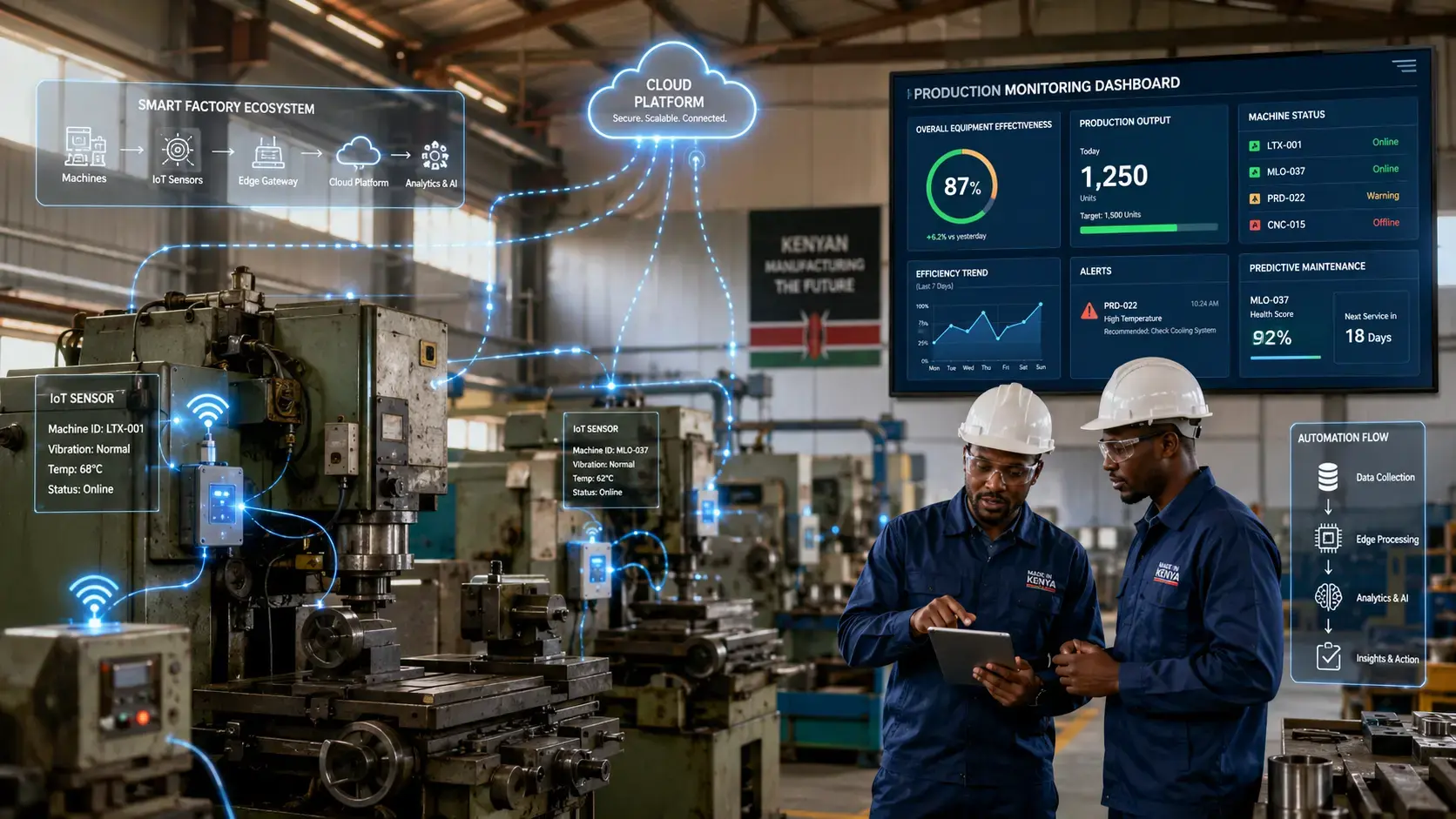
A large share of active manufacturing equipment predates networked sensing by decades. Modernizing it rarely means replacing it — it means layering connectivity and data collection on top of machines that were designed to run standalone.
Retrofit, not replace
Replacing a working CNC machine or production line purely to gain data visibility is rarely justified economically. The more common and more realistic path is retrofitting: adding external sensors, current clamps, or vibration monitors to existing equipment, and building a data layer around machines that have no native connectivity.
This changes the engineering problem. Instead of designing sensing into a machine from the start, the work becomes about instrumenting safely, without interfering with the equipment's primary function, and making sense of signals that weren't originally intended to be measured.
Where the friction actually is
- Physical access — finding a safe, representative point to attach a sensor
- Network reliability on a shop floor not designed for connected devices
- Making raw signal data meaningful without a manufacturer's own telemetry
- Keeping the retrofit from becoming a second system nobody trusts
“The hardest part of a manufacturing IoT retrofit usually isn't the sensor. It's getting the resulting data trusted enough to act on.”

Starting small, on purpose
A useful pattern is to instrument one machine or one line well before instrumenting everything shallowly. A single, trusted data stream — validated against what operators already know about that equipment — does more to build confidence in the approach than a wide rollout of unverified sensors across the floor.
That same discipline applies directly to CNC automation work: the Python-based CNC automation project referenced below started from a similarly narrow, verifiable scope before being extended.