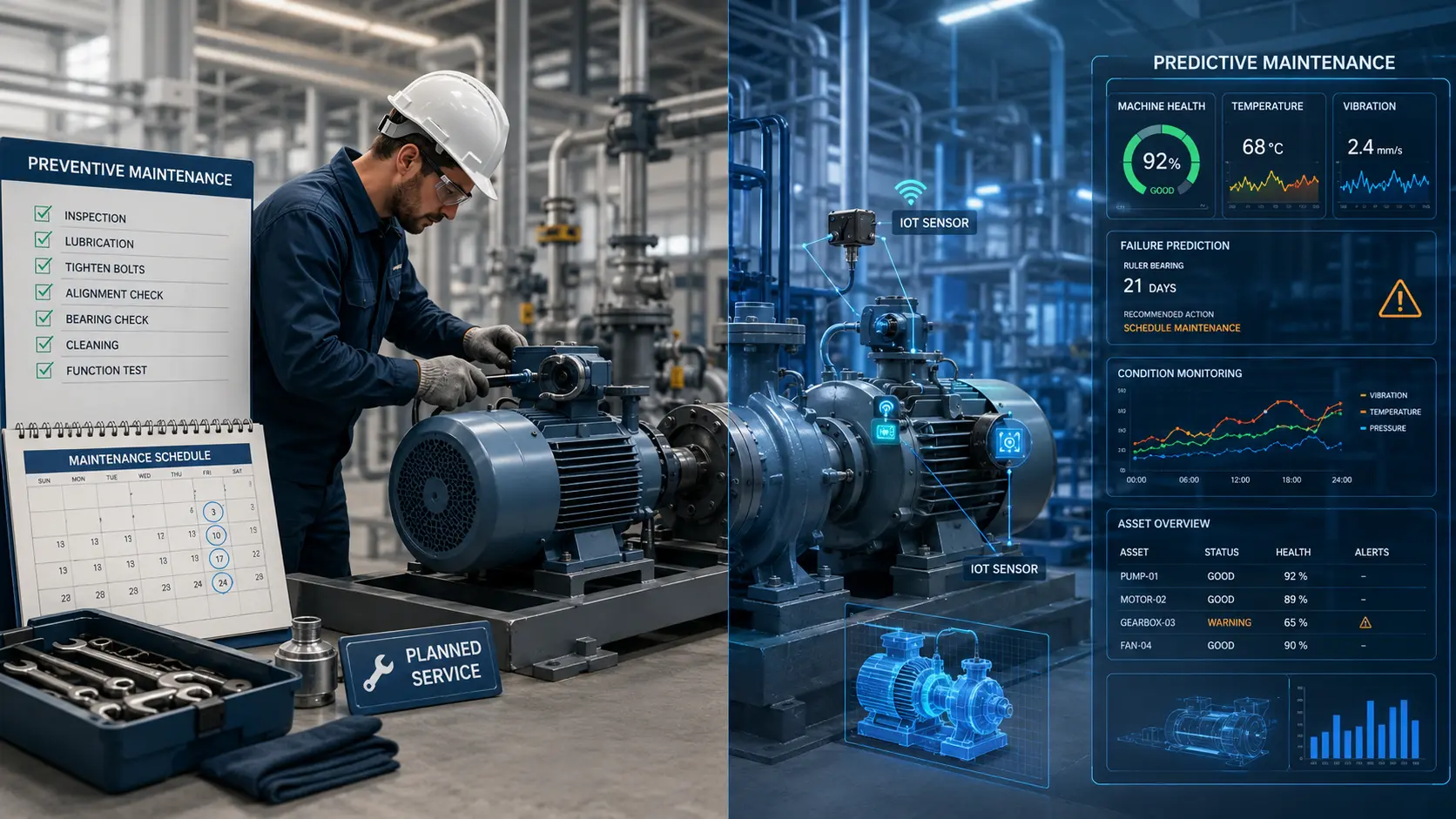
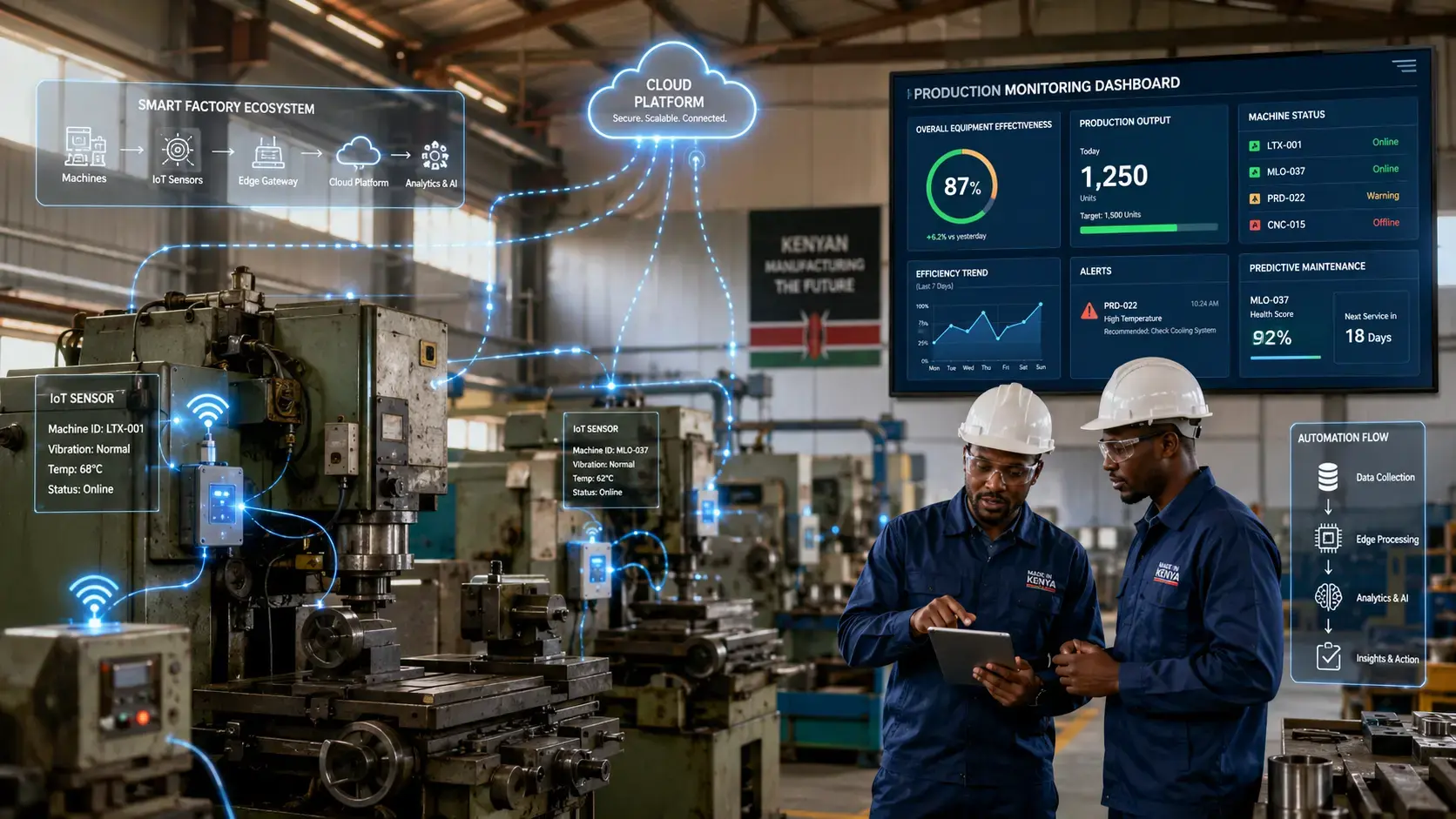
Applying machine learning to CNC condition data is straightforward to describe and considerably harder to do responsibly. These are working notes from that process, not a finished result — the underlying research is still in active development.
Data quality comes before model choice
It's tempting to start with model selection — which algorithm, which architecture. In practice, the more consequential decisions happen earlier: what's actually being measured, how consistently it's labeled, and whether the data covers enough real operating conditions to generalize beyond the exact machine it was collected from.
What actually counts as an early warning
A model that only distinguishes 'healthy' from 'already failed' isn't predictive — it's just a delayed alarm. The genuinely useful case is detecting the gradual drift between those two states early enough to act on, which is a much harder labeling and validation problem than a simple binary classifier.
- Ground condition labels in real inspection or failure records, not assumptions
- Validate against equipment the model hasn't seen during training
- Treat false positives and false negatives as different costs, not one error rate
- Be explicit about what 'early' actually means in machine-hours
“An AI model that can't say how confident it is isn't ready to inform a maintenance decision.”
Where this stands right now
This work is presented on this site as active, in-development research — not a finished, production-validated system. The full status, objectives, and current scope are tracked on the case study linked below, which is the accurate source for where the work actually stands.